
 Free text 078 6005 2906
 247 Helpline 0808 808 8141
 Please donate
 Shop Now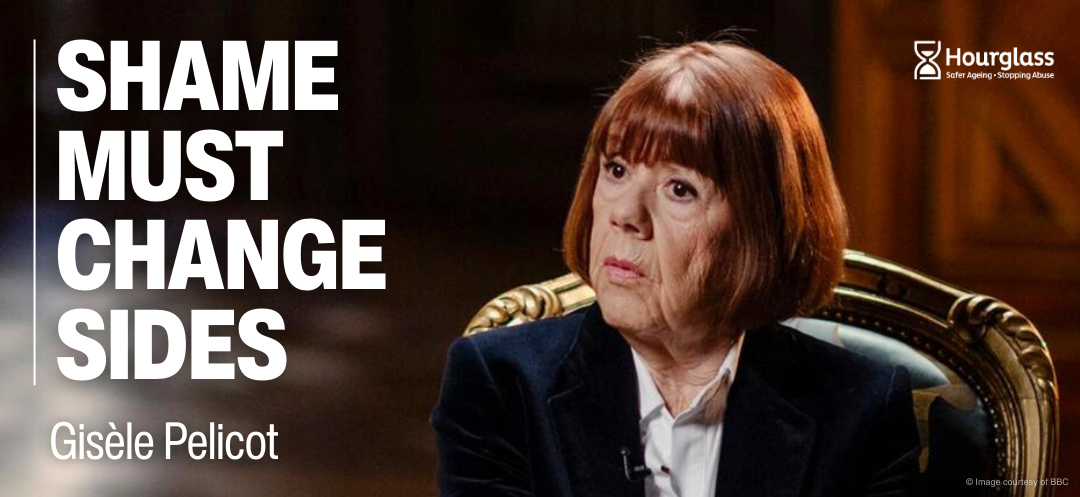
This was not a moment of catharsis but a moment of reckoning.
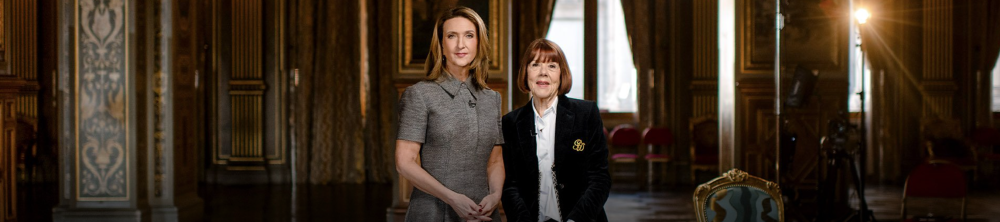
Gisèle spoke not only about what was done to her, but about where shame has been allowed to sit for far too long. When she said that “shame must change sides,” she named a truth victim-survivors, especially older victim-survivors, have been forced to carry in silence for decades.
© image courtesy of the BBC
That truth matters because Gisèle was an older woman when these crimes took place. At Hourglass, we use ‘older person’ to describe anyone aged 60 or over, not as a label of decline but to recognise the ways that age can shape risk and response. The abuse began when she was in her late fifties, and continued well into her late sixties. This was not violence against a “young” woman that happened to continue: it was abuse of an older person, and she was invisible to systems meant to protect her. Older women are rarely imagined as victims of sexual violence; as a result, warning signs are missed and perpetrators operate unchecked.
Her case shatters persistent myths about sexual violence, in particular, that it is spontaneous rather than organised and confined to youth rather than affecting older people. For nearly a decade, Gisèle was drugged in her own home and raped repeatedly, not by a stranger, but by the person she trusted most, with dozens of other men involved. This was not a failure of one individual alone, but of a culture and a set of systems that struggle to see older women as credible victims at all.
By choosing to waive anonymity, Gisèle forced the shame back where it belongs - with perpetrators and the structures that enabled them. But her interview also exposes a brutal reality: victim-survivors are listened to most when they are composed, articulate, and willing to relive their trauma publicly. Hourglass believes that justice and protection should not depend on that level of courage.
Sexual violence against older people is real, widespread, and systematically misunderstood. Governments, justice systems, and health and social care services must stop treating age as incidental and start recognising it as a risk factor that demands specialist responses. The Newsnight interview has made the invisible visible, but what happens next will show whether we were willing to truly listen.
You can watch the full interview HERE
If you are over 60 and are experiencing abuse, or are concerned about an older person, please call our free and confidential helpline, open 24/7, on
0808 808 8141


